














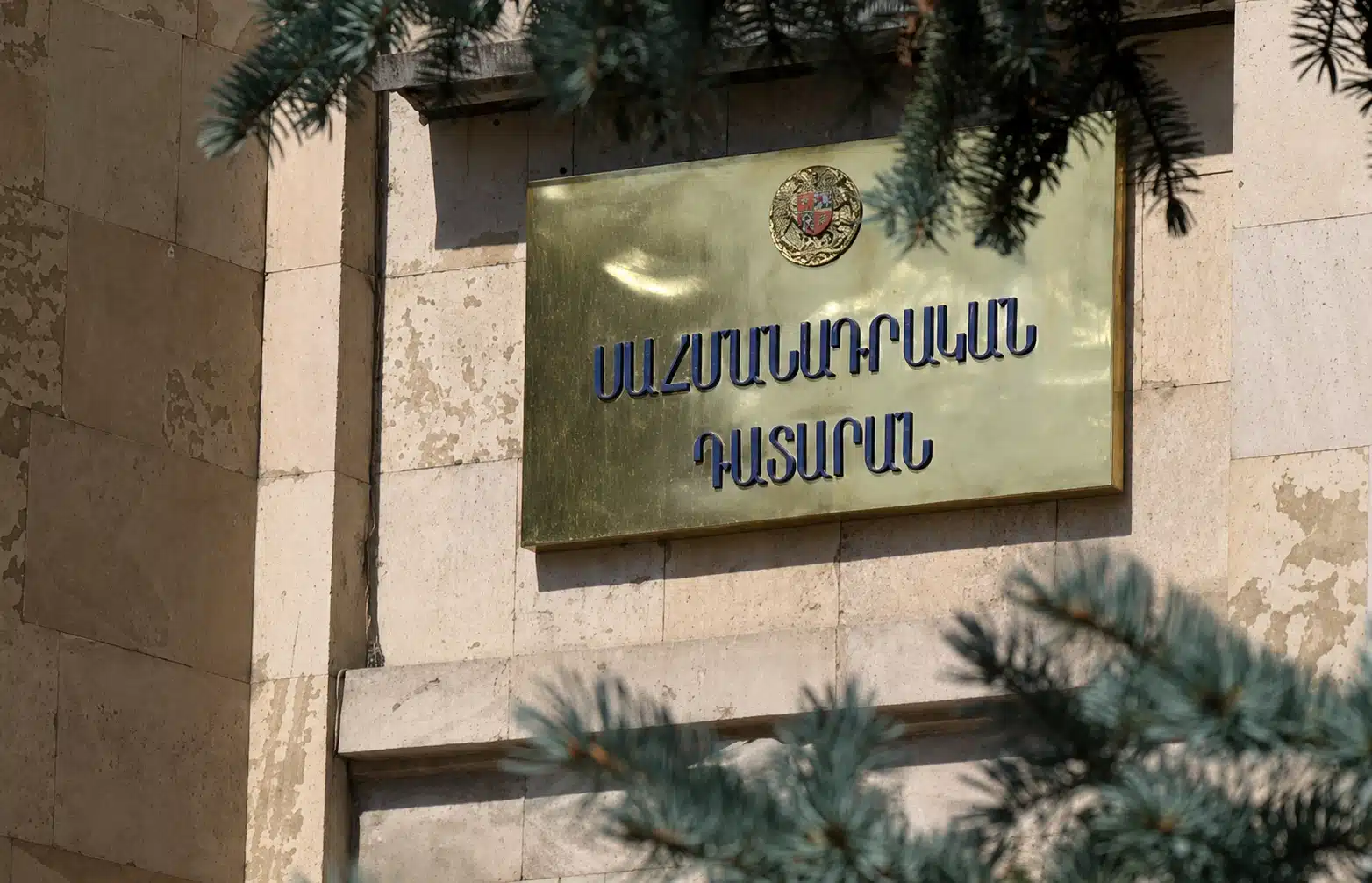
On 3 July 2026, the National Assembly of the Republic of Armenia adopted Law No. HO-398-N amending the Administrative Procedure Code of the Republic of Armenia. One of the provisions of the new law provides for the automatic termination of interim measures previously imposed by courts prohibiting the demolition of unauthorized constructions located on land owned by the State or a municipality.
The Law enters into force on 30 August 2026.
The lawyers of LSA Law Firm believe that this regulation raises serious questions as to its compliance with the Constitution of the Republic of Armenia. In the framework of an administrative case already pending before the court, LSA has filed a motion with the Administrative Court of the Republic of Armenia requesting that the question of the constitutionality of the new regulation be referred to the Constitutional Court.
What Has the New Law Changed?
Article 2(2) of Law No. HO-398-N provides that interim measures imposed on the basis of motions filed before the Law enters into force, which prohibit the demolition or dismantling of unauthorized constructions located on State- or municipally-owned land, shall be deemed terminated from the moment the Law enters into force.
Accordingly, the regulation does not concern only new judicial disputes.
The Law directly affects cases that are already pending, in which courts have previously examined whether an interim measure was necessary and have issued judicial acts temporarily prohibiting the demolition of the relevant property.
Once the Law enters into force, such interim measures are to cease to have effect automatically by operation of law, without any new judicial examination of the circumstances of the particular case.
In the view of LSA’s lawyers, it is precisely this mechanism that gives rise to a serious constitutional issue.
Can the Legislature Eliminate the Effects of a Judicial Act Already Adopted?
One of the key issues concerns compliance with the principle of separation of powers.
Article 4 of the Constitution of the Republic of Armenia provides that State power shall be exercised on the basis of the separation and balance of the legislative, executive and judicial powers.
Pursuant to Article 162 of the Constitution, justice in the Republic of Armenia shall be administered exclusively by courts, and any interference with the administration of justice is prohibited.
An interim measure is the result of the court’s exercise of its procedural powers. The court assesses the circumstances of a particular case and determines whether it is necessary to temporarily restrict certain actions pending the final resolution of the dispute.
This therefore raises a fundamental question:
can the legislature, by adopting a new law, automatically terminate an interim measure already imposed by a court in a specific case?
LSA’s position is that such regulation bears the characteristics of legislative interference with the exercise of judicial power.
Where a court, after examining the circumstances of a particular case, has found it necessary to temporarily prohibit the demolition of a property, the termination of that measure should take place through a judicial procedure prescribed by law and with due regard to the circumstances of the case, rather than automatically as a consequence of a subsequent legislative amendment.
The Right to Effective Judicial Protection
The issue is not merely institutional.
Article 61 of the Constitution of the Republic of Armenia guarantees everyone the right to effective judicial protection of their rights and freedoms.
Article 75 of the Constitution requires the existence of the organisational mechanisms and procedures necessary for the effective exercise of fundamental rights and freedoms.
Interim measures constitute one of the most important mechanisms of effective judicial protection.
Their purpose is, inter alia, to prevent a situation in which, by the time a final judicial decision is delivered, restoration of the violated right has become impossible or substantially more difficult.
This issue is particularly evident in disputes concerning the demolition of immovable property.
If a person challenges an act or decision that may result in the demolition of a property, and the court temporarily prohibits the demolition pending resolution of the dispute, the automatic termination of that prohibition may allow the demolition to be carried out before a final judicial decision is delivered.
If the court subsequently finds the individual’s position to be well-founded, the property may by then no longer physically exist.
In such circumstances, judicial protection risks becoming merely formal: a person may ultimately prevail in the judicial proceedings, while restoration of the factual situation that existed before the violation of their rights may no longer be possible.
The Issue of Retroactive Effect
A separate constitutional issue concerns the temporal effect of the Law.
Article 73 of the Constitution of the Republic of Armenia provides that laws and other legal acts that worsen a person’s legal position shall not have retroactive effect.
The new regulation, however, expressly applies to interim measures imposed on the basis of motions filed before the new Law enters into force.
Persons who obtained judicial protection before the adoption of the new Law could legitimately expect the relevant judicial act to remain effective in accordance with the established procedural rules.
The new Law changes the consequences of procedural actions that have already taken place and directly worsens the position of persons in whose favour a court had previously imposed an interim measure.
In LSA’s view, this provides grounds for raising before the Constitutional Court the question of whether such regulation complies with the constitutional prohibition on giving retroactive effect to provisions that worsen a person’s legal position, as well as with the principles of legal certainty and protection of legitimate expectations.
Binding Force of Judicial Acts
The binding force of judicial acts that have entered into force is another important issue.
The judiciary can perform its constitutional function only if judicial decisions are binding on State bodies, local self-government bodies, public officials and other participants in legal relations.
If a subsequent legislative amendment automatically eliminates the effects of a judicial act adopted in a specific case, there is a risk of undermining the very principle of the binding force of judicial decisions.
The issue becomes particularly sensitive where one of the parties to an administrative dispute is a State authority or a local self-government body.
A legislative amendment may effectively improve the procedural position of a public authority in the course of ongoing judicial proceedings, while simultaneously depriving the opposing party of interim protection previously granted by the court.
This raises an additional question as to whether a fair balance between the parties to the proceedings is being maintained.
LSA Has Filed a Motion with the Court
The issue has already developed into a practical procedural matter.
An administrative case is currently pending before the Administrative Court of the Republic of Armenia. In that case, the court previously granted a motion submitted on behalf of the party represented by LSA Law Firm and imposed an interim measure requiring the Yerevan Municipality to refrain from taking any action aimed at demolishing or dismantling the disputed property until the final judicial decision concerning its legalization enters into force.
Following the adoption of Law No. HO-398-N, LSA’s lawyers filed a motion with the court concerning the necessity of referring the matter to the Constitutional Court of the Republic of Armenia.
The motion raises the question of whether the new legislative regulation complies with Articles 4, 61, 73, 75 and 162 of the Constitution of the Republic of Armenia.
LSA proceeds from the position that there are reasonable grounds to doubt the constitutionality of a provision which, by operation of law, terminates an interim measure previously imposed by a court.
Why Does the Resolution of This Issue Have Broader Significance?
The constitutional issue extends far beyond one particular administrative case.
It concerns the fundamental relationship between the powers of the legislature and the judiciary, as well as the limits within which the legislature may amend procedural legislation in a manner affecting judicial proceedings that are already pending.
Ultimately, several fundamental questions require an answer:
- whether the legislature may automatically terminate an interim measure previously imposed by a court in a specific case;
- whether such interference is compatible with the principle of separation of powers and the independence of the judiciary;
- whether effective judicial protection remains available if the disputed property may be destroyed before a final judicial decision is delivered;
- whether it is permissible to apply the new regulation to interim measures imposed before the Law enters into force;
- whether the principles of legal certainty, legitimate expectations and the binding force of judicial acts are thereby violated.
LSA Law Firm will consistently defend its position regarding the necessity of constitutional review of the new regulation and will closely follow the development of judicial practice on this matter.
If the court concludes that the statutory grounds for referring the matter to the Constitutional Court are present, the question of whether the challenged regulation complies with the Constitution of the Republic of Armenia may be assessed at the level of constitutional adjudication.
This publication constitutes a legal analysis of the legislative amendments and reflects the position of LSA Law Firm on the relevant issue. The final determination of the constitutionality of the Law falls within the competence of the Constitutional Court of the Republic of Armenia.
Co-authors: Arsen Sardaryan and Edgar Ayvazyan